watch the video
listen on apple podcasts
play the audio
Full transcript
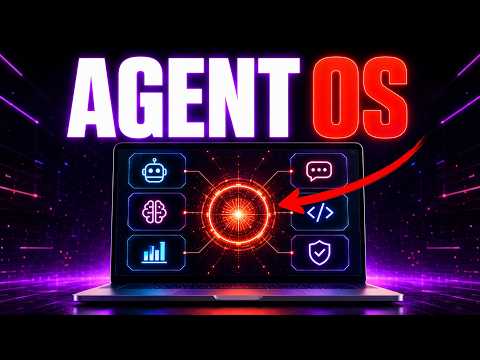
Today I want to show you a powerful system where you can use Notebook LEM inside your Agent OS to generate short videos, you can create podcasts, you can create infographics for free in one single click, you can even create amazing slide decks as you can see with research reports and you can create reports here, plus we have a studio to generate and build anything that we want in one single click using Notebook LEM, you can do all this for free, you can even create like longer format videos and you can see everything inside one workspace. So this is a system that we've set up, I call it the infinite content engine, which basically means you have one Notebook LEM in using Notebook LEM and then you have like five different content formats pulled out. Basically I've rebuilt the Notebook LEM section of our Agent OS around a simple idea, every content format gets its own tab, its own generator, its own gallery of everything ever made. So you can drop sources in and then you can get powerful outputs out in terms of the content, this is fantastic for creating content.
Now let's talk about the problem that this solves, so I call this the content treadmill problem, which is like imagine spending a whole day researching a topic that you know from code, you turn it into one video, the video does okay, then it's gone, then the next, the treadmill resets, new posts needed, new research, new script, new editing session. The podcast people want a podcast, LinkedIn wants an infographic, a client wants a deck, each one is a separate project built from scratch in a different tool. And so the problem is you pick one format, ship one piece and let the other four just, you know, you can't, you don't have time to do it all. With this system, you avoid that treadmill and so this breaks that cycle for good.
So what is the infinite content machine? Well, basically you can use Notebook LM superpower, which is that it works from your sources and your topics, you load a notebook in and then you can generate content out. So you have one notebook and then you can create shorts, you can create podcasts, infographics, decks and reports all inside Notebook LM. Now you might say as well, why don't you just go directly to Notebook LM to use this tool?
Like why don't you just go directly here? But the problem with that is like, it's not neatly organized, it's very difficult to see what you've created. And also like, where's your gallery? How do you see everything you've built?
How do you quickly create something in one single click? If I had a notebook that I wanted to create about a certain topic from like a year ago, it's just going to be almost impossible to find. And then even if I do, it's like, okay, well, you know, how do I go back and see everything that I've created? How do I know which notebooks have stuff generated?
I can't. Whereas with this system, I can easily see everything that I've built inside one place. I've got the studio, if I need to generate more stuff, I can quickly select one single notebook here inside the library, pull that into the studio and then generate a slide deck. It's just way faster, way easier.
And also everything that you do inside the agent operating system, where it links to your memory, it links to your other agents, it's all plugged into one place. It all connects beautifully together. And that solves a massive problem. Now you might also say, okay, how did you do this?
So we actually plugged in the MCP for Notebook LM into our agentic operating system. And then with a combination of Notebook LM and the MCP, we can generate content whenever we need to, which is pretty powerful. And so we just research, import it, generate the format, pull that into a gallery, and then we can publish content. So, for example, if we have a look at our library here, we have the agent OS, or we have like, for example, Hermes Astros, or we have a Notebook LM on OpenCLR here.
So we can pull that in, click on that, and then we could go over to the studio and we could generate a video in like one single click about OpenCLR, just like that. That's how easy it is. And then if we go back to our reports, we've got this report section where we can generate stuff. We've got slide decks where we can generate these whenever we want.
We can actually add a focus here so we can change the focus of the report. So we could be like, okay, OpenCLR versus Hermes, like so, hit generate, that can generate a slide deck in the background. We can see all our previous research here, all our infographics, all our podcasts, and this is all free to do, which is pretty insane in itself. So you basically have a tab for every format and a gallery in every tab.
And this is what we've rebuilt here. So for example, for shorts, we can see all our previously created videos. For podcasts, we can see all our previously created podcasts. We have, for example, infographics where we can pull in the infographics, the slide decks, and everything else inside one system that's just ready to go.
You might also say, well, where do the files all live? So they just live inside your vault. We have the agentic OS section inside my Obsidian, and that has everything saved into one place. So it's all saved into a memory system.
And the great thing about that is it syncs up across all our agents. So if we go inside Hermes, and we're like, okay, check out that NotebookLM infographic, and then post it to Twitter, it can actually do that for us using this full system. That's how it all links together. That's how you create a team of agents that are basically unstoppable and run 24-7 for you.
And the way you can get access to this is we've got the agent. I mean, you could build this from scratch, but if you want to get my system, my setup, it's inside the AI Profit Boardroom. Link in the comments description or go to the AIProfitBoardroom.com. And you might say, okay, what's the difference here?
Well, if you look at the old way, like creating content was very manual. So you'd have to research again from scratch for every format, write the script, record, put it all together, get a team together, design the infographic in a design tool, build the deck in a slide deck in a different tool side-by-side or do it manually. Each format is its own separate project. And old work as well gets scattered across all these different places that you can never find again.
And that might take like two days per piece of content. With the new way, with the infinite content machine, you have in 10 minutes per piece, you have the research done, five different formats generated, one optional focus. So you can steer the notebook in the direction you want using the setup as we talked about before. So you can actually guide it using the studio here and you can just tell it exactly what you want to do.
So if we go to the studio, we can guide it here and steer it in the right direction. And then also with one click, you've got it saved inside your gallery. So everything is saved inside here. And if we're like, okay, I just want to see the shorts I've created.
No problem. Go inside the short section. So, okay, I just want to see the podcast I've created. No problem.
We've got it all here. So everything's just neatly organized and very easy to keep it together. Now, some people say, you know, AI content is not very good. But actually what I've found is since we've started using AI content, like we've grown so much.
I mean, for example, on X yesterday, using a combination of like infographics and social media content and everything else, we reached 593,000 people in one single day using this system. So it's pretty powerful. And other people would say, well, you know, another dashboard to maintain. That's a lot of work.
But the thing is, this is much easier than using any other tool because everything sinks in. It's like, okay, if we want to use GPT 5.6, let's go to Codex. We want to see what we built with GPT 5.6. We've got it all over here.
If we want to see Claude, we've got it over here. If we want to organize all our agents together, we've got it in the paperclip. And so like everything is inside one beautiful dashboard. And it's very, very easy and neat and tidy to organize.
That's what I prefer. I don't want everything messy because otherwise you're just going to spend all your time trying to organize and find stuff that you lost before. So that is the whole system. In terms of how it works, you've got different sources for each piece of content.
You've got the format tabs. You have the galleries where you can preview everything. And you've got the vault where every file lands into your Obsidian memory. So if you want to get the full infinite content machine ready to go, you can get that inside the AR Profitable Audium.
Link in the comments description or go to the ARprofitableaudium.com. You get the full AgentOS with the infinite content machine plugged in. You get the Notebook.LM playbook. So we have coaching calls where you can set up your content machine with the rest of the community.
We've got a room with 3,900 operators running this exact stack. And the prompts, the SOPs, and the agent library to get the most out of this stuff. And the thing that I would say is like one good research session could feed your whole content pipeline for like a month. One good session with Notebook.LM can give you so much content.
And the thing I would say as well is like the bottleneck was never ideas. You've probably got loads of ideas when it comes to content. It was really production. And now production is solved.
So just to recap, you research once, you generate five different formats, you gallery everything, and then you rinse and repeat that once per week. So if you want to get that along with everything else I've shown you today, you can get that inside the AR Profitable Audium. Community, this is my community for helping you scale, learn, and grow with AI automation. If you want the full Notebook.LM system with the agent OS, you can get that over here.
And it's a zip file that you can install. You get the video, you get the full step-by-step guide, the zip file down here as well. We update it regularly so that you get new updates for this stuff as well. You also get all of our best training.
So, for example, we have a new full one-hour course on GPT 5.6, playbooks for token minimization, how to use Tencent, free API. You can ask questions inside the community, and I create a video tutorial for you every single day answering your questions. Plus our whole community helps each other as well. So you can see how much the rest of the community has helped each other as well.
And then also inside the classroom, you can check out all of our new trainings, our new courses. If you're a complete beginner, you can go from beginner to expert here. If you want to learn how to grow an agency, you've got that here. If you want our agent OS, that's over here.
We've got the four-weekly coaching course where you get help and support in real time. And then inside the map, you can meet people in your local area who are building with AI agents like you. So feel free to get that. Hope to see you inside there.
Plus you can direct message me and ask me any questions at any time.
More episodes