01What It Means to Run Hermes Agent Free
Run Hermes agent free means you can use the Hermes Agent software with a local AI model like Gemma 4 instead of paying for cloud APIs. You download the model to your own computer, so there are no token costs. Your data stays private because everything runs locally.
In this episode, Julian shows how Google's new Gemma 4 update makes this possible. The tool calling patch fixes the biggest problem with local AI agents – reliability. Now Gemma 4 can use tools like a cloud model but without the fees.
He calls this a "self-owned agent." You have the brain (Gemma 4), the engine room (Ollama or LM Studio), and the hands (Hermes Agent). Together, they let you build and automate anything for free.
02What's New in Gemma 4 for Local AI Agents
Gemma 4 just got a major update, according to the episode. It is now three times faster than before. The big change is the tool calling patch, which turns Gemma 4 from a simple chatbot into a real AI agent.
Other improvements include better tool cooling, which makes tool use more accurate and consistent. This matters because agents need to create and run tools correctly. The patch fixes the issues that made local agents unreliable.
Julian also mentions MOX, a new feature that makes Gemma 4 even faster. You can choose from different model sizes, from about 6 GB up to 19 GB. This lets you match the model to your computer's power.
Because of these fixes, Gemma 4 can handle agentic tasks like learning new skills from guides. In the episode, he uses the forward slash learn feature to teach the agent a new skill successfully.
03How to Set Up Hermes Agent with Local Models
Setting up Hermes Agent to run free with a local model is simple. Here are the steps Julian shows:
- Go to your Hermes Agent dashboard and click on "Manage."
- Scroll down and click "Add Profiles" to create a new agent profile.
- Choose the model from Ollama – specifically Gemma 4.
- If you don't have Ollama, go to ollama.com, download it, and install it.
- Run Ollama and select Gemma 4 as your model.
- Alternatively, you can use LM Studio or MLX via Hugging Face to run local models.
After that, your Hermes Agent will use Gemma 4 as the brain. You can test it by typing a message, and it will respond using your local model.
04How to Use the Self-Owned Agent for Free
In the example, Julian uses the forward slash learn command. He gives the agent a guide, and the agent breaks it down and understands how to use the skill in the future. This works well with Gemma 4 and responds quickly.
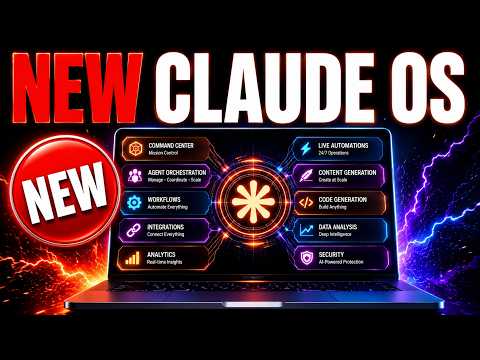
You can also use local models in an agent operating system. In the episode, he shows a setup where Gemma 4 builds code locally. You have a preview tab to see what the agent created, a build section for the actual code, and a workspace to store everything.
The system works like this: Gemma 4 is the brain, Ollama is the engine room, and Hermes is the hands. You type a message, the brain thinks locally, and it can use tools to complete tasks.
This free brain can draft content, manage and edit files, do research, and create content. It can even run agent loops for long periods without costing anything.
05Results and Tests with Local Models
Julian tested the setup on several builds, including a website. The website was the most impressive design, likely because they gave a custom skill for web design. The result looked clean and beautiful, showing that local models can produce good work.
He also references a research paper by Kilo Code. The paper tested whether they could achieve Fable 5 level intelligence without Fable 5. They found that it all comes down to the plan.
If a frontier model creates the plan and a local model implements it, the output is similar in quality.
This means you don't lose much quality if you delegate tasks to local models. The local model just follows the plan, so it makes fewer mistakes. This is a smart way to save money while keeping quality high.
06Tips, Limits, and Mistakes to Avoid
One limit is that local models like Gemma 4 are not as good as top frontier models like Fable 5. Julian says they are not anywhere near that level, even with powerful hardware. But for free and private use, they are a good option.
To get the best results, use a hybrid approach. Have a frontier model like GPT 5.6 as the main brain, and delegate sub-agent tasks to Gemma 4. This saves tokens and keeps quality high.
Another tip: make sure to create a good plan before using a local model. The Kilo Code research shows that a solid plan from a frontier model makes the local model's output much better.
Mistakes to avoid include not using smaller models if your computer is weak. You can choose a smaller Gemma 4 model, like the 6 GB version, to run on lower-end hardware. Also, don't ignore the tool calling patch – it's essential for agent reliability.
07Who Should Run Hermes Agent Free
This setup is for anyone who wants to use AI agents without high token costs. If you run heavy agent loops, your API bill can grow fast. Using a local model eliminates those costs completely.
It's also good for people who care about privacy. With local models, your prompts and files never leave your computer. You avoid rate limits and don't need an internet connection to use AI.
Julian calls this the "self-owned agent" and says it's the future. Early adopters who wire free local brains into their stack reduce token use and learn the skills early. Whether you're a solo builder or business owner, this approach saves money and gives you full control.
If you want a complete system, the AI Profit Boarding offers the local agent setup, mission control dashboard, and training on Hermes and local models.