watch the video
listen on apple podcasts
play the audio
Free Claude Code Setup: Run Claude Code on Free APIs with an Agent OS (OwlAlpha + OpenRouter)
The script explains how “Claude Code is now free” by using a free, open-source project that sits between the Claude Code CLI and the API, allowing it to plug into free model APIs (e.g., OwlAlpha, Gemma 4, and other OpenRouter free options). The presenter demonstrates building projects in real time inside a custom Agent Operating System dashboard with chat/voice input, workspace previews, and persistent memory via an Obsidian-based system, claiming this enables unlimited experimentation without token worries. Examples include a playable snake game, visual animations, real apps, and a 30-second showcase video generated using Remotion. The stack is described as Claude Code CLI + “Free Claude Code” + a free model “brain” (OwlAlpha with a million-token context window and native tool use) integrated into an Agent OS, with setup available via a zip file through the AI Profit Boardroom community.
00:00 Free Claude Code Intro
00:34 Demos and Results
00:59 Live Build Snake Game
01:32 How Free Setup Works
02:55 Video Agents With Remotion
03:31 Why Free Beats Tokens
04:30 Best Free Models List
05:35 Agent OS Access
06:12 OwlAlpha Brain Explained
07:21 Four Pillars Architecture
10:27 Myths and Objections
12:26 Easy Install and Community
13:44 Wrap Up and Next Steps
The script explains how “Claude Code is now free” by using a free, open-source project that sits between the Claude Code CLI and the API, allowing it to plug into free model APIs (e.g., OwlAlpha, Gemma 4, and other OpenRouter free options). The presenter demonstrates building projects in real time inside a custom Agent Operating System dashboard with chat/voice input, workspace previews, and persistent memory via an Obsidian-based system, claiming this enables unlimited experimentation without token worries. Examples include a playable snake game, visual animations, real apps, and a 30-second showcase video generated using Remotion. The stack is described as Claude Code CLI + “Free Claude Code” + a free model “brain” (OwlAlpha with a million-token context window and native tool use) integrated into an Agent OS, with setup available via a zip file through the AI Profit Boardroom community.
00:00 Free Claude Code Intro
00:34 Demos and Results
00:59 Live Build Snake Game
01:32 How Free Setup Works
02:55 Video Agents With Remotion
03:31 Why Free Beats Tokens
04:30 Best Free Models List
05:35 Agent OS Access
06:12 OwlAlpha Brain Explained
07:21 Four Pillars Architecture
10:27 Myths and Objections
12:26 Easy Install and Community
13:44 Wrap Up and Next Steps
Full transcript
Cloud Code is now free, and I'm going to guide you through exactly how to set this up today. You can see some examples of what we've built right here. So if we play this video, we actually got a free Cloud Code to create a bunch of examples of what you can build with free Cloud Code. And then it actually created a video where it showcases all the projects together, as you can see, using another free skill, which I'll come on to in a second.
So you've now got a free version of Cloud Code that's super powerful, runs on any free API, and means that you can use Cloud Code for free forever. I'll show you exactly how it works in a second. So that whole video, plus all of these demos, was fully created with free Cloud Code, which is pretty insane. Like, the outputs are good here, and this is completely free to build.
Here's another example. I can create, like, really visual, interesting stuff as well. We can preview that full screen, as you can see, too. If we go on this one, here's another one.
Pretty interesting stuff here. Here's another one, and it's not bad at all. I thought it would be terrible. It's actually pretty good.
So what we've done is we've built this into our agent operating system, as you can see, and then we can either type to it, or we can actually chat to it. So we can use this and actually build with it directly. And then, for example, if we say, okay, build out a snake game, you can see that it will start building that out directly. So you've got the prompt here that I just spoke, and now it's building it out with the preview on the right-hand side.
And so you can code and build anything that could be apps or anything that you want using free core code with this system. You might be wondering, okay, how does it work? So basically what we do is we take the, which is a free open source project, and then we can basically use the power of core code, but this allows you to plug it into any free API. And there's plenty of free APIs out there.
So, for example, you could use our alpha on OpenRouter. You could use Jema4, which is also free. And I call this the Goldie agent engine, right? It means that you can basically build apps or tools or games or websites, as you can see right here, using this free powerful model.
And so you can see it's actually building in real time. And then we've got the preview. We can also check out our workspace over here, too. And so we can build anything that we want using this process, like you can see.
Pretty crazy, right? And we can also see what we've previously created. So if we scroll over here, you can see all the stuff that we've actually built out recently using this setup. Pretty wild, right?
And then over here, you've got the chat. So you can speak to it with the agent video factory. You could actually ask it to create videos for you and that sort of thing, or you can use the chat in the workspace, which is absolutely amazing. So just to recap here, I built a playable game, spinning galaxy, animations, videos, reworking apps, and the cost to make them was free, right?
Didn't cost anything. And so free cloud code can basically automate everything for you on a free model. And here's the whole stack and the four things it built, right? So again, it built this video.
You might be wondering, okay, how did it create this video? Like, how do you get an AI agent to do that? So what you can do here is you can use something called ReMotion. And ReMotion allows you to train your AI agents to create videos, right?
It can create animations and put them together. And so this whole thing, this 30 second video, was fully created with free cloud code, which is pretty crazy. And so not only did it create the projects, but actually create a video about the projects as well. And yeah, it's amazing.
And then these are some of the projects we built, as you can see right here. You know, and before, this is the interesting thing as well. So before, if you were using cloud code, if you want to build cool stuff, you really need an API, right? And then you use a lot of tokens and you need a lot of resources.
And also you hold back because you can't build exactly what you want to build, simply because when you're building it out, you're worried about tokens and all that sort of thing. Whereas when we've wired free cloud code into our agent operating system, we can build and we can experiment and we can try cool stuff. And the reason we can do that is because we're not limited or constrained by APIs or tokens, right? We can just build cool stuff out all the time.
We can even control it with our voice. And it's pretty wild. So that is the free Goldie agent engine. So now, for example, if I type one sentence, a free model can write the whole app.
It can create games, as you've seen already. And also you could train it to do computer use and all that sort of stuff as well. And these are the examples of what we built. So six real apps built for free.
I just did this morning just for fun, just to show you the power of what you can do and how you can build this stuff, right? Now, you might be saying, okay, what models can you use? What models are available for free? So if you go to OpenRoot and you type in free, you can see there's loads.
You are not limited in terms of free models anymore, right? If you look at what's out there, you've got Hermes 3 by Noose Research. And bear in mind, Hermes itself, the AI agent, is one of the most powerful AI agents in the world. So this is quite a respected AI lab, and you can use a Hermes model for free, right?
You also got Nemetron from NVIDIA, so you can use models for free. KimiK 2.6, free, right? And so you've got all these different free APIs. I think 99% of people are not even aware of, but you can plug those into your AI agents and into your agent operating system, just like we've done over here.
And so most people think that Cloud Code only works one way. They think you have to pay per token to use it. They think the CLI is locked to one model provider. They think a free version would be worse than a paid version.
But none of this is true, right? This is an open source project. It basically sits between Cloud Code CLI and the API that you use, and you can go from there. Wakele says, love the agent OS.
How do you create yours? Yeah, so basically, the way that I've set it up is we have a system here for using it inside the AI Profit Boarding. So you can get the zip file, and then you can just install the zip file from the AI Profit Boarding. And that allows you to use the agent OS directly.
We also have prompts and a full roadmap for using it, and instructions inside the zip file on the readme and how to use it as well. And then every day, we're just adding new cool stuff to it. So every day, we're updating it with the new updates and new cool stuff, and just updating and improving every single day, right? So that's all inside the AI Profit Boarding.
Link in the comments description or go to the AIProfitBoarding.com. So you might be wondering, okay, what free model did we use? We used our alpha. Why?
Because it has a million-token context window, native tool use, and it's purpose-built for AI agents. So when you plug free cloud code into your agent operating system, you get a cloud code experience that's free, right? And a brain that remembers everything because it's got a million-token context window. And so there's three key parts to this.
You've got cloud code, you've got free cloud code, which is the open-source project, and you have the brain itself, which is our alpha. And then you can plug it into a custom dashboard, which we've done with this system here. And the thing that I really like about having a custom dashboard like this and why I'd recommend it for you is because you can mold it and change it depending on what comes out, right? And bear in mind, new stuff comes out every single day.
So if you see something that's amazing, you're like, wow, I want to use that, then you can just plug it into your system, right? So, for example, if we see ReMotion comes out, video agents are possible now, sure, let's plug that in. Hermes agent, we saw that you can use it as a voice agent with 11 labs now. No problem.
Let's plug in Hermes Jarvis and create that, right? And so all this stuff, bear in mind, I'm not a coder. I'm not technical. I can build.
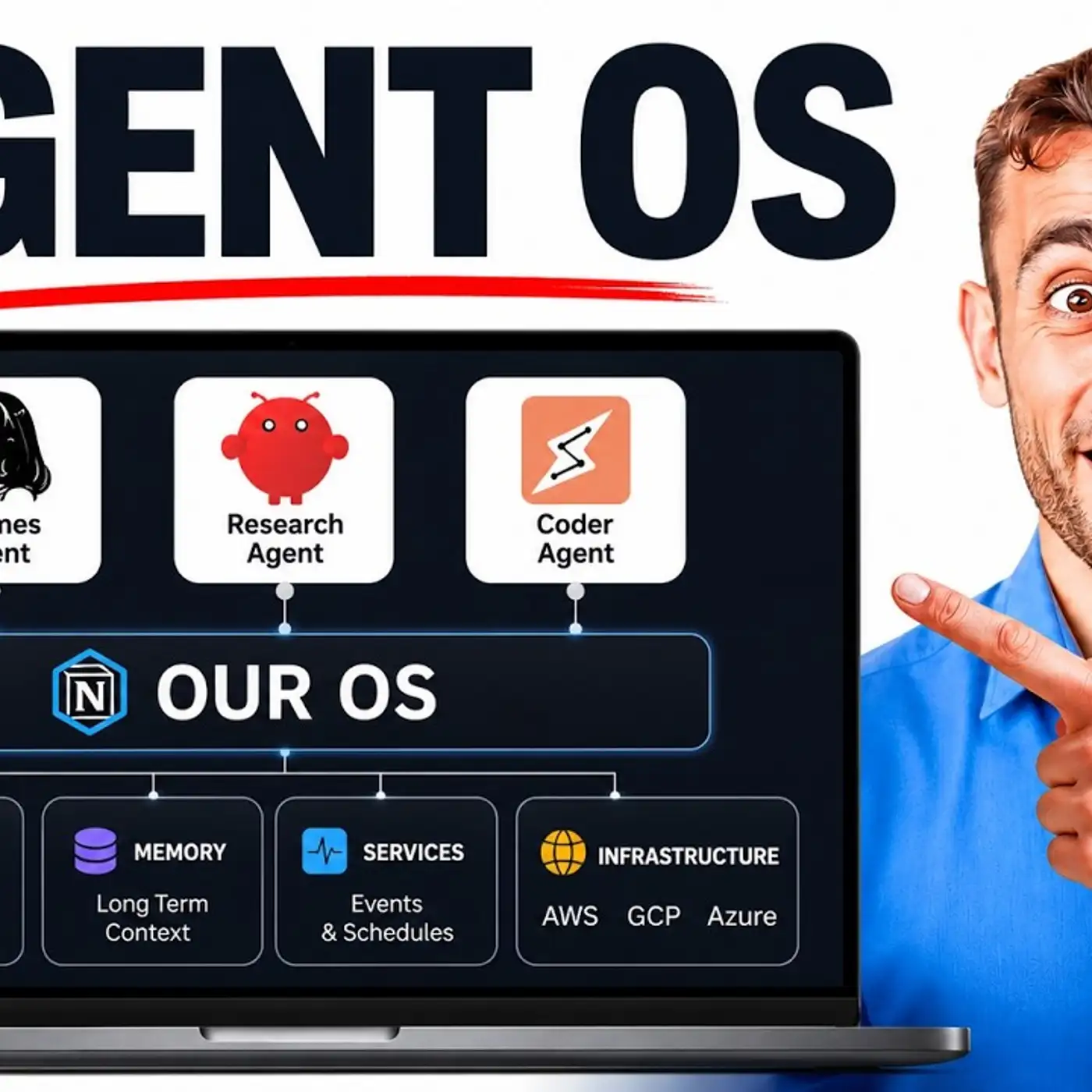
And so if I can build it, you can build it, and you can customize it as much as you want, right? And so this is the setup that we've used. And basically, if you look at this, there's four pillars to the agent engine. So this is interesting things like most people are paying for APIs.
Also, they lose their data when they're switching. They don't have their own system. Whereas with this system, the agent operating system, you have it, right? It's ready to go, and it's plugged into free APIs.
You have the memory as well. So the memory system is plugged in, which means a lot of this stuff stays the same, no matter what memory or what new tool comes out. And the great thing about that is if, for example, I don't know. Let's say, for example, GPT-6 comes out next month.
Let's say GPT-6 comes out. For most people, they're going to have to change the whole setup and switch everything over, and it's going to be like shiny object syndrome. If you have a whole memory system that you own, and then you have an agent operating system that you've built, the cool thing about that is it doesn't matter what comes out, because the systems stay the same. It's just the models and the agents that change, and you can easily swap them in and swap them out.
So this is the system that we've built. There's you. There's a core code. Then you have free core code.
Then you have our alpha for the API. And after that, you can plug it into AgentOS. You've got the memory, the contacts, the Obsidian, Studio, Kanban Journal. We've even trained our agent operating system to be able to send emails.
So you can see here, we said, email me at juliangoldy.com, saying the calls moved to 3 p.m. Boom, it's done with Hermes, right? And so the power of this stuff is just amazing, and it all improves every single day that we use it. And so the four components here are the three brains.
You've got our alpha, which is the model. That's free to use. Million token of context. It supports native tool use.
It's purpose-built for AI agents. And the same teams that built Hermes OpenCore already use it as well. So that's pretty cool. And then you've got free cloud code.
So this is the open source setup that allows you to use free inside cloud code. Once you've done that, you've got agent operating system. And this is the whole dashboard, the whole UI, the whole system for operating your AI agents. And also, the cool thing I like about this is, if you were using, for example, the terminal, it'd be very messy, right?
It'd be very messy to see what you've created previously. There's a preview stuff. You can't do that inside the terminal, right? Whereas, for example, if you build something out inside an agent operating system, well, you can check it and have a look anytime you want.
And you can customize it however you want as well, right? So this whole coding system that we built with the agent factory and then the preview, that was just created with my own customizations. And the fourth part is really the improvements that you make. So the iterations, right?
The longer you use it, this whole stack of free cloud code and the API and the memory and the agent OS system, the more you use it, the smarter your stack gets. Every conversation feeds your memory. Every memory sharpens the next conversation. So you can choose which model you use.
You can choose your memory and you can just switch around. And so you have a lot more freedom. And the great thing about this is like the cost of running AI is collapsing. So the people who set up the right architecture today will have a free agent engine forever.
And that's the difference here. Even if you're not running this locally, it's fine. You don't need to run it locally, right? You can use free APIs from OpenRouter.
Now, I've seen is that most people never try this because they hold a belief that turns out to not be true. Let me break down some of the key ones here. So some people think that cloud code only works with Anthropic, that you have to pay per token, but cloud code can work with any API if you're using the free cloud code setup, right? Other people will say free models are weak.
They're pretty bad for agentic work. But bear in mind, our alpha is a million token context window, native tool use, and it's purpose built for AI agents. Other people will say this sounds technical and scary. That's why we actually built out the agent operating system to make it non-technical, make it easier to use and easier to access, so that you don't need to be technical to set this up.
You just get the zip file inside the alpha volume, and you're good to go, right? Other people say if I leave Claude, then I'll lose my chat history and integrations. But actually, you don't, right? Because if you have an agent operating system, you have a better memory than Claude.
And the reason for that is because you've got Obsidian as the memory setup inside your system. Now, what does that mean? That means that it doesn't matter which tool you switch to, which tool you use, which AI agent you use, doesn't matter, right? Your memory stays the same.
And it's free to use, it's easy to use, and it's just ready to go at any time, right? So if I go to my knowledge graph here, this is ready to go. I can plug it into any new AI agent that comes out, no problem, right? And that's the difference right here.
Other people say our alpha will eventually stop being free, and then I'll be stuck. But actually, if you look out over, you can see there's so many different APIs that you can use for free. It doesn't matter if one goes, right? Because there's always a new one that comes out.
Noose Research just released two for free inside their system this week. They actually set up Step 3.7 Flash for free. And then also you can use NVIDIA Nemetron Ultra for free with Noose Portal as well. So that's the amazing thing.
And when you do this, the chain breaks, the owls fly free. Our alpha flies free, and you can plug it into whatever you want. So it's pretty amazing. So do you do stuff inside Terminal to be able to start the agent operating system?
No, so what you do is you get the zip file, and then you just install it with Hermes or Claude. And basically, there's a whole setup inside the zip file where you can quickly install it with Hermes or Claude or whatever AI agent you prefer, and it will just go from there. So our AI agents built this and then set it up so it's easy for any other AI agent to install. So, for example, if you were in a case, it's difficult to set up, blah, blah, blah.
So you'd actually see lots of people inside the alpha portal we've already built there. So you can see here, Nick built his out, and he was saying how amazing it was. You can see Eric as well. He's built out an amazing system here.
This Mike built out his own mission control using our systems. Ravit as well. David. So there's just loads of people building this stuff out.
Why? Because it's so powerful. And also because it's so easy to set up as well. Here's another one, right?
John McKenzie built out his own system as well using the agent operating system. So if they can do it, anyone can do it, right? If I can do it, you can do it. So the old way with this system was like you were paying for tokens.
If you stop paying for APIs, you lose access. And also Claude sets the rules, right? Whereas with the agent engine, you've got an open source setup. Our alpha is free as an API.
And then agent, your system you're setting up, the agent operating system is yours and it's ready to go. So that's the cool thing about this. So that's basically it. That's how to use it.
What it looks like, how to set it up, how it works, et cetera. You've got persistent memory in there. You've got Obsidian Vault. You can add your contacts, add your calendar, add the studio, Kanban, journal, live status as well.
And it's really simple and easy to do. So that's basically it. We've also got a 30-day plan for setting this up as well. And just to recap, you're using our alpha with the agent operating system.
Every time you use it, it's free. And also it improves every time you use it because you're making it better and better. Plus you're improving the memory. And if you want your own agent engine based on what I've shown you today, or you can get my setup.
You could create your own. But if you want my setup ready to go, you can get that inside the AI Profit Boarding. So it gives you the full system and you also connect with the people running their stacks right now. So all the people I showed you that are creating their own agent operating system, they're all inside the community as well.
And there's always people online 24-7 to help you, which is great. Lots of cool stuff right here. Lots of cool people building awesome stuff as well. It's a very active community with people asking questions, get help and support whenever they need to.
And also inside there, you get the complete guide on how to set up free core code. You get the agent OS system, you get Obsidian and the Infinite Context engine we've built. You've got ready to use rules for all of this stuff. And we've also set up so much more inside the agent operating system.
Like for example, you can see there's a studio. We've got Jarvis built in. We've got the setup for images and videos and voice. We've got persistent sessions, goal mode, workspace, and all your AI agents working together in one place as well.
So feel free to get that link in the comments description or go to the AIprofitballroom.com to get access. Thanks for watching.
More episodes