01What Is DeepSeek Harness vs Claude Code?
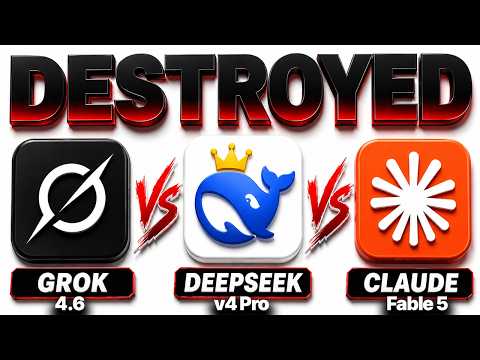
DeepSeek Harness vs Claude Code compares two AI coding tools for building websites and apps from simple prompts. DeepSeek Harness is a free, open-source harness from DeepSeek that just launched on GitHub. Claude Code is a desktop tool from Anthropic that many developers use every day.
In this episode, Julian and his guest Kazra tested both tools side by side. They used the exact same prompt: build a 3D anime accountancy website and code a Tetris game. The goal was to see which tool performs better in real-world use.
The episode shows that both tools can generate working projects. But they differ in speed, cost, and output quality. Understanding these differences helps you choose the right tool for your coding tasks.
02Main Features of DeepSeek Harness and Claude Code
DeepSeek Harness is open source, so you can plug it into any backend or AI model. It dropped on GitHub just two days ago and already has 105,000 stars. It is one of the fastest growing GitHub projects of all time.
- Free to run: The harness itself costs nothing.
- Flexible: You can use it with different brains, like OpenCode or DeepSeek's API.
- Very early: It is still at v0.1, so it is only a tenth of what it could become.
Claude Code Desktop is a full-featured tool that Kazra uses for everything. It is his go-to for daily work. The recent update was huge, in his view.
He rates it 9/10. He says it is underrated how big the update was.
- Professional output: Claude Code produced a more professional-looking website.
- Context awareness: It picks up on more finite details, like location names.
- Integration: It works well with other tools like Fable 5.
03How to Set Up DeepSeek Harness
Setting up DeepSeek Harness is simple because it is open source. The episode shows a few ways to get started. Here is the process they demonstrated.
- Go to GitHub and find the DeepSeek Harness repository.
- Clone or download the project to your computer.
- Choose a brain to plug in. For free use, you can use OpenCode instead of the DeepSeek API.
- Configure the harness to connect to your chosen backend.
- Run the harness to start coding inside the interface.
One interesting tip from the episode: you can even use Claude Code to set up DeepSeek Harness for you. Kazra has a system where an agent OS uses AI as the orchestrator. It delegates tasks to different AI systems and sets everything up automatically.
That way, you don't need to touch DeepSeek Harness at all if you prefer. The orchestrator handles the installation and testing for you.
04How to Use Both Tools in a Real Project
In the episode, they used the same prompt for both tools. The prompt asked for a 3D anime accountancy website and a Tetris game. They gave no extra context or color choices.
Just one prompt and go.
DeepSeek Harness finished the whole task in 11 minutes. The result had floating icons and a working Tetris game. Kazra noted it was very animated and cartoony.
But he said it was not terrible, especially with no context given.
Claude Code was still running after 30 minutes. The result looked more professional. The animation on the homepage follows your mouse.
It also mentioned specific details like Mancha and Northway, England, because it had more context about the user.
The Tetris game from Claude looked nicer and felt smoother. Both agreed that Claude's output was more professional from an accountancy point of view.
However, Julian pointed out that neither result is ready to go live. Both tools need more back-and-forth and prompting to refine the output. The examples show the raw output from a single prompt.
05Results, Costs, and Ratings from the Test
The episode showed clear results from the side-by-side test. Here are the key numbers and ratings.
- DeepSeek Harness: 11 minutes to complete, used 483,000 tokens, cost 5 cents (with a $10 account top-up).
- Claude Code: Still running after 30 minutes, used about 48,000 tokens.
- Cost comparison: DeepSeek is about 56 or 57 times cheaper than Claude, but it burns way more tokens.
Kazra rated Claude Code Desktop 9/10. He uses it every day and says it changed everything. He rated DeepSeek Harness 7/10.
He likes the competition it brings but says it does not excite him like other open-source releases.
Julian agreed with the 9/10 for Claude but thought Kazra was a bit harsh on DeepSeek. He gave it 7/10 as well. He believes the competition will push Claude to improve.
DeepSeek Harness is only at v0.1, so it has room to grow.
They used DeepSeek V4 Pro and Claude Opus 5 on Hive, so the comparison was like for like in terms of model tier.
06Tips, Limits, and Mistakes to Avoid
One big warning from the episode is the token usage. DeepSeek ripped through 483,000 tokens to build one page website. That is a lot.
Even though it is cheap now, if DeepSeek raises prices later, the cost could go up.
Another tip is to think about the total cost over time. Even though DeepSeek is 56 times cheaper per token, it uses ten times more tokens. So the savings might not be as big as they seem.
Also, do not expect either tool to produce a ready-to-go website from one prompt. Both need more context and back-and-forth. The cartoon style of DeepSeek's output did not match the professional accountancy site, so you need to give color and style guidance.
One mistake to avoid is switching your whole workflow to DeepSeek Harness just because it is free. Kazra fully moved to Zcode, but Julian says he would not move his day-to-day work. He would only move certain tasks to DeepSeek.
Use Claude Code for setup and complex work, and DeepSeek for cheaper, simpler tasks.
07Who Should Use DeepSeek Harness vs Claude Code
Claude Code is for developers who want a polished, professional tool with a big head start. It is more expensive but produces better-looking results. It is also better at using context, so the output feels more tailored.
If you do client work or need high quality, Claude Code is the safer choice.
DeepSeek Harness is for developers who want a free, open-source option and enjoy experimenting. It is great for hobby projects or when you want to save money. It is also for people who want to support open-source tools and push the industry forward.
The hosts both lean toward Claude Code for daily work. But they see a space for DeepSeek. In a few months, DeepSeek could improve the harness and make Claude step up its game.
That competition is good for everyone.
If you are new to AI coding, either tool can help you build simple projects. Just remember to give clear prompts and be ready to iterate. The episode shows that even a single prompt can produce working games and websites.